See our May 2019 Newsletter

October 2021

Amid the global health and climate challenges we all face today, there are so many communities working together to make their corner of the world a better place. These communities seldom, if ever, make the headlines. So, with this newsletter, we are bringing them to you through their stories below: Urban Growers Collective in Chicago, NDPonics in western Virginia, Federation KAFO in Guinea-Bissau, LI-BIRD in Nepal, and UBINIG in Bangladesh. These are extraordinary people who, in their work, honor the ideals of Seeds, Soil & Culture. We hope you enjoy their stories and more than 50 others you can learn about on this website.

Jonathon Landeck
Advisor to the Seeds, Soil & Culture Fund
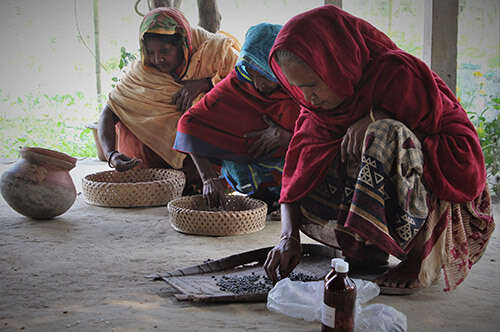
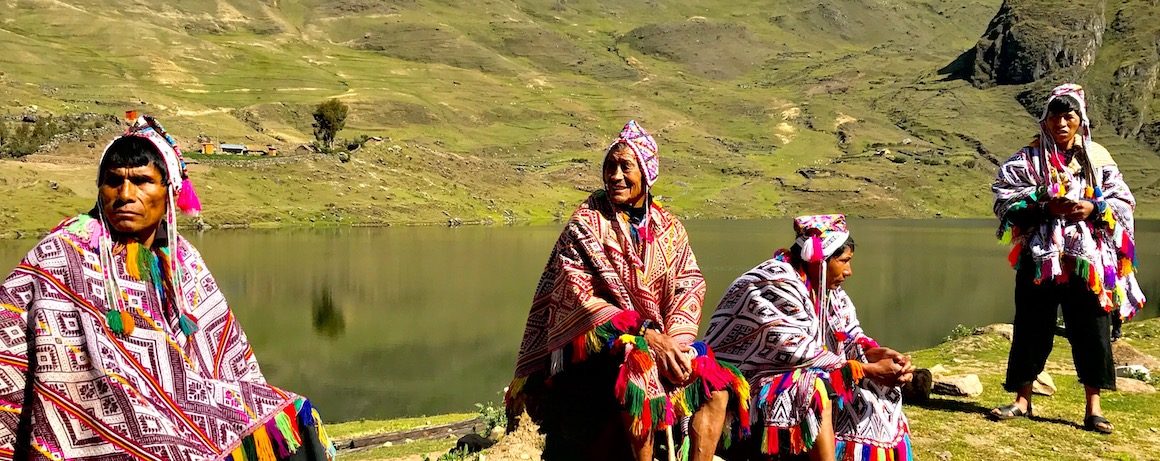
Bioversity International (now the Alliance of Bioversity International and CIAT) was one of the first organizations to receive a grant from the Seeds, Soil & Culture Fund, in large part due to the tireless efforts of Ronnie Vernooy. I met Ronnie while both of us were participating in a Walking Workshop in southwest China that was organized by the International Network of Mountain Indigenous People (INMIP). Within his portfolio at Bioversity International, Ronnie has been working in Nepal with LI-BIRD (Local Initiatives for Biodiversity, Research and Development, http://www.libird.org/), an NGO that capitalizes on local initiatives to improve the livelihoods of rural poor and marginalized farmers, especially women, and in Bangladesh with UBINIG (Policy Research for Development Alternative, http://ubinig.org/), a community based and led research and advocacy organization linking life, ecology, and livelihood strategies for dignity, diversity and the joy of living.

UBINIG in Bangladesh and LI-BIRD in Nepal are building their capacity to manage community seed bank networks and organize seed knowledge exchanges and festivals. This work is strengthening the Nayakrishi Seed Network in Bangladesh and the National Community Seed Bank Association in Nepal so each would have a stronger voice in national dialogues about seeds and build linkages with civil society and government organizations. The work is contributing to the conservation of local crop varieties, better access by farmers to diverse and better adapted varieties, more exchanges of seed knowledge between farmers, improvement of traditional varieties, and more local control over seeds. Action research is addressing issues of heritage seed conservation, such as farmers’ incentives to conserve seeds on a community-wide basis; monitoring the impact of local seed conservation; and the roles of women and men custodian farmers. Applied trainings focus on the design of community-based heritage seed conservation models that smallholder women and men farmers anywhere can learn about and adapt to their own local context. LI-BIRD has designed a digital “seeds” portal for accessing information on heritage seeds and facilitate seed exchange.

In Bangladesh, smallholder farmers working with UBINIG on community seed banks celebrate farming in harmony with nature through seed-inspired food and crop festivals. Many communities with these seed banks belong to a national agroecological movement in Bangladesh that has pioneered and promotes traditional seed stewardship. Community Seed Wealth Centers (CSWC) are managed by farmers as nodes of the Nayakrishi Seed Network (NSN). The CSWC’s are linked with Seed Huts at the village level.

In Nepal, nearly all community seed banks with whom LI-BIRD works are made up of smallholder farmers practicing traditional farming. For these farmers, taking care of seeds and soil is key to a healthy Earth. LI-BIRD manages a biodiversity fund which supports community seed bank actions. Some districts have developed plans to include community seed banks in local, regional, or national public budgets. LI-BIRD also organizes national workshops on community seedbanks to facilitate wider sharing of experiences and knowledge throughout Nepal. LI-BIRD is leading a global trend among farmers and other stakeholders who view community seed banks as fundamental rural organizations.


Photo credit for LIBIRD and UBING photos: The Alliance of Bioversity International and CIAT/R. Vernooy


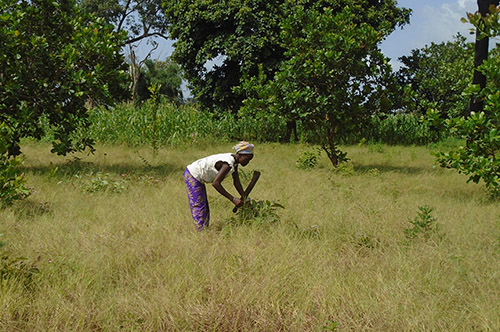
Guinea-Bissau is one of the most enchanting countries I have ever visited, now twice. For both visits, I stayed at the Djalicounda Farmers Center, located in a rural area in northern Guinea-Bissau. Federation KAFO, an organization of 27,000+ farmers including 17,000+ women, that owns and manages the Centre Paysan de Djalicounda, an agroecology school that KAFO established in 2016 where smallholder farmers, women and men, share their knowledge about traditional agriculture and learn from others. There is no other school of this type in Guinea-Bissau. The landscape around Djalicounda is classic West African savannah and tropical dry forest, with long dry seasons followed by intense rainy seasons. Sambu Seck is the tireless General Secretary of Federation KAFO. Sambu has helped make Federation KAFO one of the most innovative farmers’ organizations in West Africa, rooted in the modern history of Guinea-Bissau.

Consider the framed photograph of Amilcar Cabral that hangs in Federation KAFO’s office. Cabral, born in Bafatá, a small rural town in then colonized Guinea-Bissau, was an agronomist by training who, in the late 1950s and early 1970s, became a leading Pan-Africanist voice for decolonization and liberation from the grip of Portugal, which he described as “an act of culture ». One of Amilcar Cabral’s famous philosophical quotes is: “Always keep in mind that people are fighting to live better and in peace, to see their lives move forward, to secure the future of their children. » This perspective is undeniably reflected in the work and leadership of Sambu Seck and farmer-led Federation KAFO.

While most of KAFO’s work takes place in farm villages, the Djalicounda Farmers’ Center is a gem on its own. Its design is simple, rustic, authentic, artful, and comfortable. It includes gardens, livestock enclosures, cropland, an adjacent forest, a vermiculture farmette, café-restaurant, radio station, a culture and environment space, a traditional seed conservatory, lodging accommodations, offices and a facility to turn local fruit into 100% juice in recycled bottles.

One of the most traditional crops that small farmers grow in Djalicounda is fonio (Digitaria exilis). KAFO, with very good reason, is committed to increasing the visibility of fonio across and beyond Guinea-Bissau. Not only is fonio a deeply cultural crop, it is also beautiful, hardy, nutritious and, to testify from my personal experience, very delicious. Farmers can rely on fonio to produce cereals even during the worst growing seasons, as it can thrive on poor soils and with low rainfall. Being a cultural crop, fonio is almost always served at festivals, ceremonies, rituals, weddings, baptisms, funerals, events in honor of visitors or esteemed people, and as spiritual offerings. Although fonio is difficult to process, even families with very limited income usually have a reserve of fonio for special occasions; it is a real common delight. Fonio is also a beautiful field crop with a charming trait of lying down, parallel to the land when ready for harvest, begging for harvest. Its edible grains are tiny, delicate and polished.

In recent years, fonio supporters have started promoting this beautiful grain on a potential path to stardom, perhaps like quinoa, but not forgetting to maintain its accessibility to native growers. With a gradual increase in the culinary popularity and market value of fonio across West Africa, as well as in Europe and the United States, Federation KAFO sees an economic opportunity for its member smallholder farmers to improve, as a priority, the genetic quality of heritage fonio seeds via traditional on-farm selection methods. In this way, KAFO helps its member farmers assert their rural peasant identity, value their community standards regarding local seeds, and legitimately appropriate land to cultivate a crop of great cultural, social and, potentially, market value. KAFO’s promotion of heirloom fonio varieties also helps support smallholder farmers in their efforts to maintain their traditional land rights and legitimize their status as permanent stewards of their communities’ local natural resources. KAFO farmers believe that the land is incapable of producing seeds if it has lost its spirit or its fertility. They believe it is their social responsibility to use their traditional knowledge about fonio to ensure that the spirit of the Earth stays alive. By using local seeds that the land is familiar with, as KAFO farmers say, they are giving the land they cultivate more opportunities to respond with more spirit and generosity than ever before.

Read the story in French ›

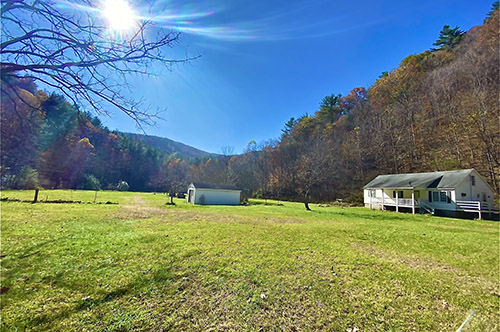
On the flanks of western Virginia’s mountains in April, you can find the promise of green and warmth, families of hillside trees, and spring water dripping under carpets of last year’s leaves, headed toward the South River. That’s what I found when Lucas Tyree guided me through a forest on original Monacan land. Lucas spent much of his childhood in this forest. He knows the older trees personally. He feels the plants and rocks as living beings, and the forest spirits that were around us. Lucas has mapped every grave site in his people’s forest, marked by rock piles that I noticed only when Lucas pointed. He also pointed out early mushrooms, invisible to me, blending with the ground until Lucas picked a few. As founder and Executive Director of NDPonics, Lucas leads the Eena-Ahtay (mother-father) AnthroForest project.

NDPonics is dedicated to preserving and restoring a western Virginia forest landscape where Monacan people have lived for centuries, before and after the land was taken from them. The goal of the Eena-Ahtay AnthroForest project is to transform 77 acres of once illegally logged land in the Blue Ridge Mountains into an indigenous food forest. The work is re-creating the traditional Monacan terraced growing system of native plants, trees, and forest crops. The land harbors many streams and ample evidence of ancient temples, burial mounds, and cultivated terraces, a mosaic of wilderness once traditionally managed. The idea is that Monacan people will be able to express their culture and spirituality in their original habitat.

As a boy, Lucas Tyree learned traditional Monacan lifeways in the Blue Ridge Mountains from his father and grandfather, who told him that these mountains are the only place he could be himself. They said, walk barefoot and feel the roots of the trees and coolness of the earth in contrast to the blazing sun. We are the forest’s caretakers, healthy when we eat the foods that grow here. Monacan people protected the forest for nine generations without having to fell its trees, while farming the mountain slopes using a system of terraces. The anthro-forest will have an overstory of nut trees, a midstory of fruit trees, and understory of berry bushes, edible herbs, vegetables, medicinal plants, mushrooms, and tubers. The forest spirits are there to help. The land where Lucas’ grandfather made his home is now a peaceful meadow surrounded by chestnut, hickory, and white oak trees, and mulberry, huckleberry, raspberry, ginseng, bloodroot, bluestem, pawpaw, and persimmon, a living blueprint of Monacan life for centuries.

Within the Eena-Ahtay Project, NDPonics is creating a safe space for Indigenous and other marginalized communities in Virginia and North Carolina, where they can gather together and exchange agroecological knowledge, culture and language, and traditional cuisine. The work has a Traditional Ecological Knowledge and Indigenous Conservation component for remediating old-growth and formerly logged forest lands, nurturing wild grass and pollinator flat meadows, and developing food producing riparian areas around an eastern brook trout stream. The mountain-to-valley food production system approach of NDPonics is creating a tradition-grounded model for other tribes to consider for their lands. NDPonics is also working to purchase and restore additional land, to expand the scope of its Eena-Ahtay Project from the mountainside forest lands down to riparian lands. Through these efforts, NDPonics seeks to preserve indigenous foodways and promote self-determination, self-respect, and community health.

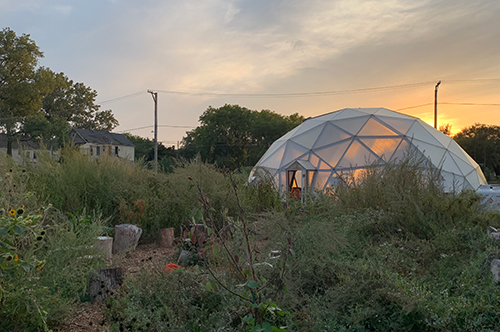
My first attempt to meet Erika Allen, the Co-Founder and CEO Programs and Strategic Development of Urban Growers Collective (UGC) in Chicago was blocked by a freak snowstorm in April. My next try was a hot day in July 2019 at UGC’s South Chicago Farm, close enough to Lake Michigan that we occasionally felt a cool breeze. With Erika that day was Malcolm Evans, Farm Production Manager for all of UGC’s eight Chicago farms totaling 11 acres. UGC’s South Chicago Farm is in a neighborhood of single-family homes, once part of an even larger community whose land still surrounds the farm. Today, from the South Chicago Farm’s driveway, two-story houses are within easy view, yet the land there feels like the edge of a prairie, an evocation of what it was three hundred years ago. The neighborhood itself might be less populated today but the spirit of neighbors and love remain vibrant and strong.

Erika and Malcolm took me around the South Chicago Farm, its herbs and flowers and vegetables looking vibrant and rich, the greenhouses full. The Farm has plots for people in the community to use to grow produce for sale or to nourish their families. There is such a positive vibe at the South Chicago Farm because it is an environment that supports good health, healing, and creativity through food and culture. It lends itself to UGC’s efforts to increase access to outdoor play and learning for Black and Latinx youth in Chicago, especially those impacted by violence. Erika and Malcolm know that the ability of young people to deal with trauma can be radically transformed by providing safe spaces and using art as therapy.

Today, at its eight urban farms, UGC works to increase community cohesion and social capital, access to healthy food, job opportunities, and peoples’ overall well-being. The learning that occurs at UGC’s urban farms emphasizes tradition and spirituality, the key components of culture that underlie UGC’s community-oriented actions and the healing and sense of freedom these bring. UGC offers workshops on conserving heritage seeds, raising bees for honey and wax, restorative gardening practices, and medicinal herb cultivation among other topics. UGC also supports public art through murals, mosaics, and sculptures that are co-created by local artists and members of the community at UGC’s farm sites. UGC strives to reclaim food and urban farming narratives through hosting workshops that are co-facilitated by its partners, using a pay-what-you-can fee model. In addition, UGC is furthering its mission through the Green Era Renewable Energy and Urban Farm Campus, where UGC and its partner organizations are transforming a vacant brownfield into a 9-acre campus, with a 2-acre anaerobic digester and 7-acre urban farm. The Campus will remediate the site that was previously a brownfield and divert organic waste from landfills through anaerobic digestion to convert it to renewable energy and nutrient rich compost to be used on-site.

UGC’s work aligns with research that suggests urban farming can produce significant positive social, health and economic outcomes for communities including reduced crime and vandalism; reduced blight; increased community cohesion and social capital; greater access to healthy food; expanded opportunities for job creation; and improved mental health and well-being. UGC’s strategy has led to hundreds of teen job-training opportunities; unemployed Black and LatinX men beautifying vacant lots across Chicago; Head Start preschoolers engaged in school garden learning curricula; incubator farmers supplied with technical assistance and land; increased food access through its Fresh Moves Mobile Market on retrofitted vehicles; farmers’ markets and farm stands providing fresh, locally grown produce; and creating safe spaces on UGC farms for relationship building, skills development, and healing.

Thus, UGC is meeting its goals to build people’s knowledge of healthy food and food systems; increase access to safe healing spaces; improve social emotional learning and mindsets; improve job readiness and employment skills, increase access to entrepreneurial and economic opportunities; increase access to healthy food; transform community spaces; and improve the quality of life for South Chicagoans.