November 2017

The Seeds, Soil, and Culture Fund supports the transformation of local and regional food systems through the power of biodiversity and biocultural heritage – indigenous peoples’ knowledge about their communities’ natural resources and their stewardship practices. In many indigenous communities, traditional knowledge and the spiritual unseen are bridges that connect living soils with living seeds. For this reason, Seeds, Soil, and Culture grants encourage smallholder women and men farmers to bring their culture to the forefront, to share how indigenous peoples’ beliefs, values, language, ethics, art, music, cuisine, ways of learning, and traditional farming practices are transforming agroecology worldwide.
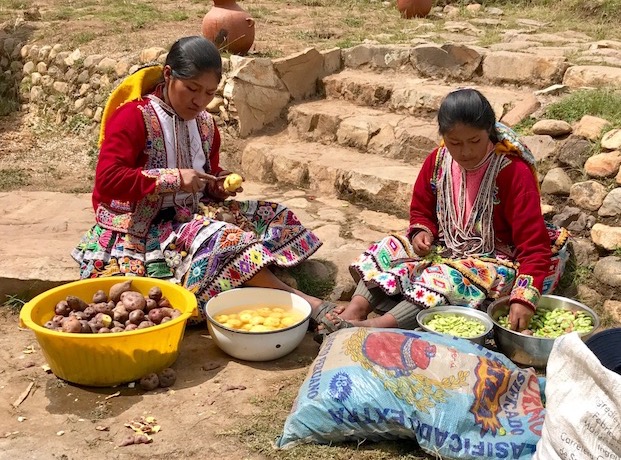
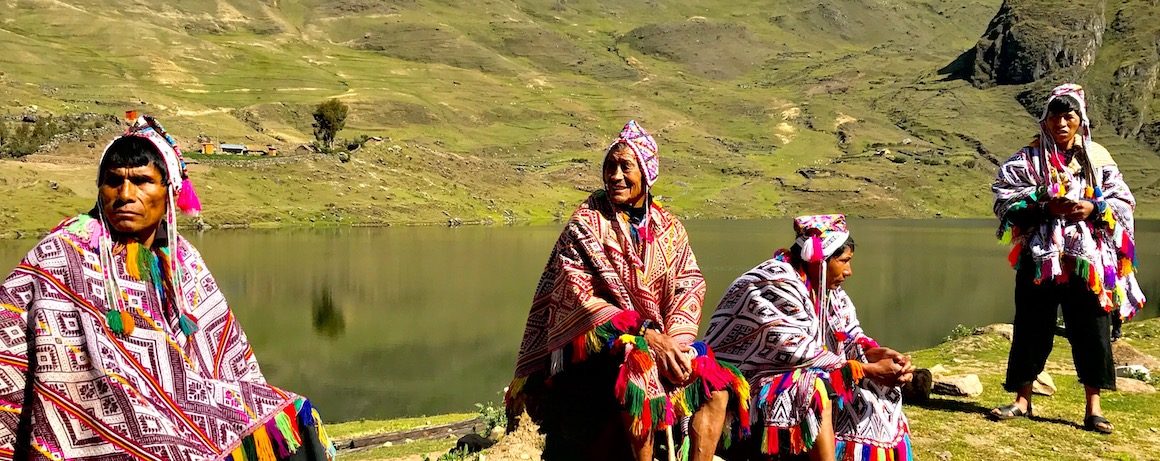
In the Sacred Valley of Peru lies the Biocultural Heritage Territory of the 12,000 hectare Potato Park, close to the city of Cusco, a former capital of the Inca Empire. There, in April 2017, agroecology experts representing mountain communities in nine countries of Central and Eastern Asia spent nearly a week with Peruvian farmers, guardians of more than one thousand potato varieties. Hosting the delegation was a Peruvian non-profit, Asociación ANDES. ANDES works with local communities in the Sacred Valley to develop strategies to protect indigenous resources, knowledge, and rights.

The extraordinary visit to Potato Park in April, 2017, was officially the 4th Learning Exchange of the International Network of Indigenous Mountain People. It was the most recent exchange in a series of “Walking Workshops” co-sponsored by INMIP and the International Institute for Environment and Development (IIED). The previous Walking Workshops took place in Bhutan (2014), Tajikistan (2015), and China (2016).

The Peruvian mountain community helping to host the 4th Walking Workshop comprised representatives from villages within the Potato Park and nearby Quechua communities, Lares and Apurimac. These farmers are profoundly dedicated to conserving their natural and cultural resources, calling fully upon their traditional knowledge and spiritual values to nourish their families from the crops they have grown and loved for centuries.

As explained by the local leaders, three interconnected realms comprise the Sacred Valley world: the wild, the spiritual, and the human. Long ago these three communities agreed to share the world with reverence, responsibility, and reciprocity. Only when these three communities work together in harmony does good live in the world. This way of being in the world of the Sacred Valley naturally extends to growing and consuming food. This is sumaq kausay, beautifully harmonious and healthy living, how their people should live in concord with Mother Earth, Pachamama, as they meet their essential daily needs.

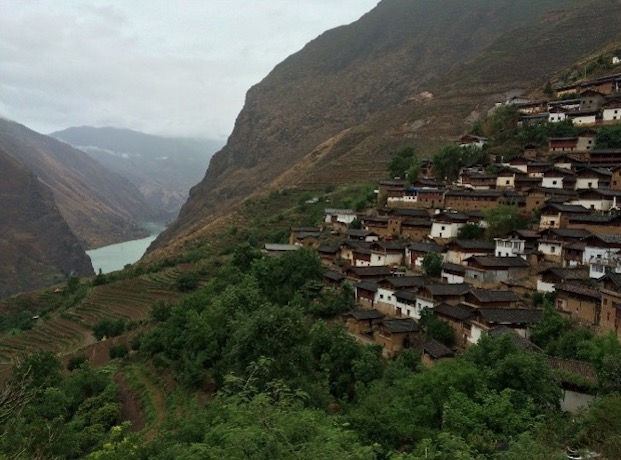
Tucked into the mountains of Yunnan Province, Stone Village has been the capital of the Naxi people for 1,400 years. A Naxi core value is that human life and the environment would be in balance. And Naxi biocultural heritage reflects resilience and solidarity in Naxi communities. This heritage – Naxi views of the spiritual world, their culture, and their ritual traditions – are all embedded in their agricultural history. It remains essential to a sustainable future. Stone Village farmers manage and maintain a thousand-year-old system of irrigation channels that course through and under fields of grains and vegetables. The system is grounded in Naxi values which emphasize the wisdom of harmonious co-existence between people and nature.

Today a major component of Stone Village’s biocultural heritage is its community seed bank, which includes over 100 local landraces of rice, maize, sorghum, vegetables, and soybeans, and 25 other local plant species of significant cultural and economic value. Stone Village is one initiative among several in China to support farmers’ local seed systems and their basis in farmers’ traditional knowledge. It is part of an action research collaboration – the China Farmers Seed Network – to advance farmer-managed seed systems in seven communities, all located in zones designated as Nationally Important Agricultural Heritage Sites (NIAHS).

The NIAHS are mosaics of agricultural land use, landscapes, and livelihood activities that have emerged from indigenous and local farmers’ experiences and adaptation to unique natural environments. The action research is enabling local women and men farmers to identify key factors that characterize the ecological, socio-cultural and economic resilience of agricultural heritage systems, and apply these factors to their own community seed system. In this way, Stone Village farmers aim to strengthen their traditional ecological values, life principles

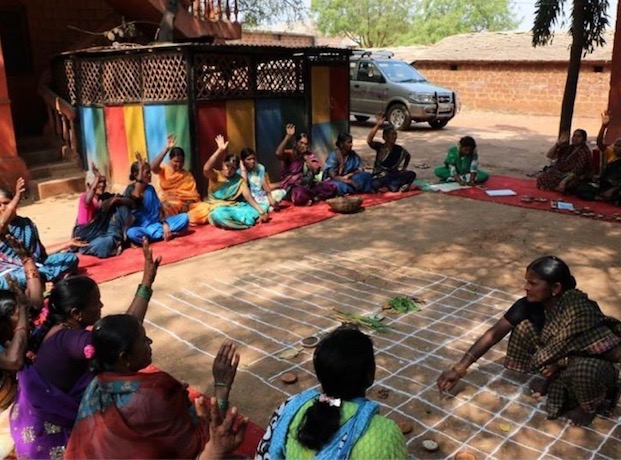
The women farmers of Deccan Plateau in the Zaheerabad region of India, home to 5,000 members of the NGO Deccan Development Society, have a world view that embraces biodiversity as an expression of a deep spiritual relationship between growing food and the local environment. Nothing is more fundamental and sacred to this relationship as traditional seeds, which link the past and promise a fruitful future. Their tradition is a tapestry of biodiverse farming intertwined with rituals and belief systems.

Farming is a tough life in semi-arid Zaheerabad; its soils are weathered and the rains are not reliable. It takes ingenuity and determination to grow food here. DDS works closely with creative and spiritually-minded farmers who share their skills and knowledge in more than 50 communities through sanghams – groups of women and men – who make decisions collectively about growing, consuming, and selling crops and food products. Sangham members farm 1.3 hectares on average using 20 varieties of seed for cereals, beans, vegetable, fruit, and spice crops. DDS has more than 80 varieties of crops in its seed bank. Women farmers who partner with DDS “feed the soil to feed their families and livestock.” And DDS markets their millet and millet products via Sangham Organic.

The women and men farmers of the Deccan Plateau sow traditional seeds in harmony with their local soil ecology, optimizing soil humus and a nurturing a vibrant microbial life. Their practices thwart crop failure due to poor germination or drought and the subsequent stress to farm families. Their lives and learning are rooted in the veneration of seeds as sacred to life. The heritage seeds that women farmers in their sangham use and safeguard for future crops are adapted to local growing conditions and have high rates of germination. To honor manure – Eruva, the Goddess of Wealth – the source of their fields’ fertility, every Spring women farmers of the Deccan Plateau break coconuts and sprinkle vermillion and turmeric on their compost pile, twirling a lighted lamp over it, a traditional spiritual ritual.

Nor are weeds and insects seen as pests. Weeds that compete for soil moisture during the rainy season are habitually removed, yet other weeds are used as green fodder for animals, food for people, and medicines. Certain weeds are known as recyclers of nutrients from the subsoil to the topsoil. One important weed control measure is that weed seeds are tossed into compost piles where they quickly germinate then die, rendering them powerless against future crops. Many women farmers of the Deccan Plateau share the sentiments of Ms. Bidakanne Sammamma, a member of the DDS executive board, who points out: “We have a strong and deep relationship with our cattle on our farms, and all animals for that matter, including birds who eat our cereals, which we don’t mind, and insects whom we have no right to kill. Innovation means marching forward to traditions. It means having multiple securities, which is the reason our farms are so biologically diverse. It’s how we farm, it works well for us.”

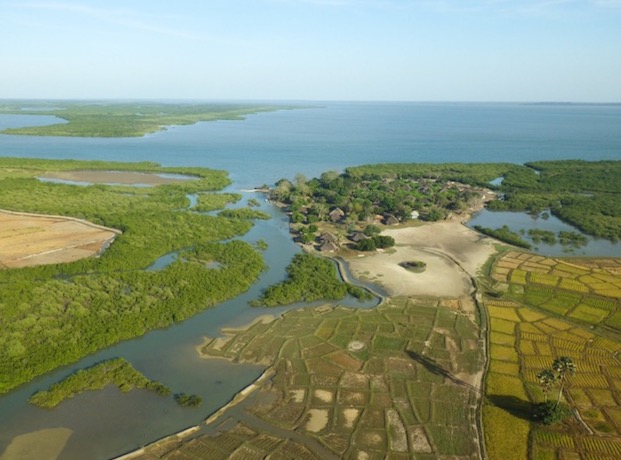
The Urok Islands of Guinea-Bissau, West Africa, occupy the northern area of the Bijagós Archipelago, and include three inhabited islands (Formosa, Nago, Chediã) and several sacred islands. More than 3,000 people inhabit the islands. The Uroks have remarkable biodiversity in its coastal and marine areas, hosting the largest concentration of migratory waterfowl that winter in the Bijagós Archipelago as well as manatees, dolphins, crocodiles and otters. Its dense mangrove cover and sandy shores and inlets are home to abundant populations of fish, crustaceans, and mollusks. The islands’ interior includes palm groves, grassy and shrubby savannas, and forests where wild food and medicinal plants thrive.

The Women’s Forum of Urok (FMU), composed of smallholder women farmers on Formosa and Nago, recognizes more than 100 of their members as “seed guardians” who conserve heritage seed varieties important to local food and cultural sovereignty. The women and men farmers of FMU are collaborating with Tiniguena, a national NGO in Guinea-Bissau, to expand the sowing of heritage crop varieties and establish community-managed seed conservatories housing culturally and economically strategic seeds in Urok.

Tiniguena means “this Earth is ours” in Cassanga, the language of one of 30 ethnic groups in the socio-cultural mosaic of Guinea-Bissau. Tiniguena’s vision is that Guinea-Bissau must be a place where people can live in peace, to benefit present and future generations. For nearly two decades, Tiniguena has worked with local communities to support participatory management and governance of the Urok Islands, which are part of the Biosphere Reserve of the Bijagós Archipelago off the west coast of Guinea Bissau. The Biosphere Reserve is now a candidate to be designated as a UNESCO World Heritage Site. It comprises 88 islands and islets, many of which are considered sacred by the Bijagó people, who traditionally inhabit the islands and maintain ways of living that are respectful of the environment.

Bijagó society is matrilineal and gerontocratic (leadership of elders). Women and elders have specific roles in managing the natural spaces and resources that frame their way of life. Despite the efforts of the FMU and Tiniguena, communities of the Urok Islands face challenges to safeguarding their sacred spaces, heritage seeds, and ancestral knowledge from external interests wishing to economically exploit the Urok’s rich biodiversity. With respect to farming, traditional Bijagó crop and soil management prioritizes principles of family and community solidarity and harmony. And biodiversity is viewed by farmers as fundamental to preserving the spiritual and cultural identity of Bijagó people via the use of plants and seeds in rituals and ceremonies. To this end, in 2005, Tiniguena persuaded the Government of Guinea-Bissau to approve the creation of the Urok Community Marine Protected Area (AMPC Urok), which is now part of the West Africa Protected Areas Network (RAMPAO), a model for participatory natural resource governance.

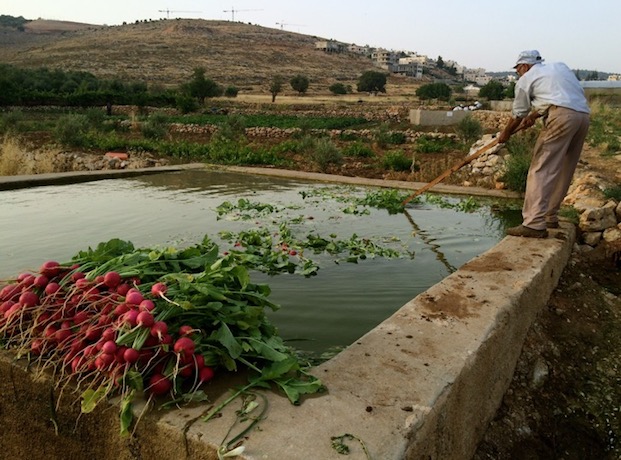
For several centuries before the Palestine Heirloom Seed Library opened its doors in 2016, wheat and barley crops, fruit trees, and goats graced the hills around the village of Beit Sahour, Palestine. In the lower landscapes of Beit Sahour thrived a farming system called Ba’al. Village farmers would draw upon residual groundwater from the rainy season to grow vegetables, fruits, and grains – without the need to irrigate. In the traditional system, as the groundwater receded deeper into the subsoil, the roots would follow. This reliable system persisted into the 20th century, then fell into disuse in the face of social upheaval.

Ba’al farming system varieties are hundreds of generations old, sowed and harvested when Palestinian farmers were not challenged by agribusiness, political dominance, and climate change. The term Ba’al originates in an ancient Palestinian practice linked to the Canaanite deity of fertility and destruction. In drought years, people would beseech Ba’al to send rain, a prayer known as salat al istisqa’ (the rain prayer). Ba’al crops are symbols of the cultural lifeline that survives in communities of the West Bank. Each variety is culturally important, but the Jadu’i watermelon is a crop that carries Palestinian identity deep within its roots. Habeh Soda Wheat, White Cucumber, and Baladi Tomato are also highlighted for revival.

Guided by a vision to preserve and promote heritage seed varieties and traditional practices of Palestinian farmers, the Library and its associated El Beir Arts and Seeds Cultural Center are reviving a belief that culture-based farming is fundamental to community identity. In addition to being a seed conservatory for Palestinian farmers, these are venues where farmers, artists, poets, writers, journalists, and others showcase their work and talent. Library staff identified key heritage varieties to save and propagate, food crops that inspire farmers and community members to be active in preserving their biocultural heritage.

Today, 20 Palestinian farmers are helping to lead workshops on culturally-important seeds, and growing the Ba’al crops as seed stock for next year. They are sharing their experience through media, at conferences, and in markets, hoping to inspire more farmers in Palestine to grow, conserve, and market these and other culturally-important crops.