See our November 2017 Newsletter

August 2018

Dear Friends and Colleagues,

Since we launched the Seeds, Soil and Culture initiative in January 2017, I have had the good fortune to meet and learn from an incredible group of food growers and gatherers practicing agroecology worldwide. In this newsletter, I’d like to introduce a few of these Seed, Soil & Culture caretakers and share some of what I have observed and learned.

In the last year, I was fortunate to visit indigenous communities in New Mexico, Arizona, Utah, Michigan, New York State, and Ontario, Canada. In the native communities I visited, young people in local and native communities are definitely taking their future into their own hands. They are energetic, enthusiastic, respectful, and smart in how they are addressing and solving urgent social problems. Their desire to learn traditional knowledge and culture about food and farming from their elders is genuine and contagious. Though the path forward may be bumpy and long, there is positive change happening now, and there are many reasons to be hopeful for a better future.

Just as important, for the four projects reviewed here ─ two based in U.S. indigenous communities, one in Tajikistan, one in Guatemala ─ a key element of the Seeds, Soil & Culture initiative is commonly held by the folks who manage the projects: their deep commitment to honoring and further cultivating the spirituality of food and farming. Each community may recognize the inherent spirituality of food and farming in unique ways yet these beliefs are tightly woven into the fabric of their daily life and sustenance. It’s the main reason why we recommended Seeds, Soil & Culture support for their projects.

Enjoy reading!

Jonathon Landeck
Advisor to the Seeds, Soil & Culture Fund
August 2018
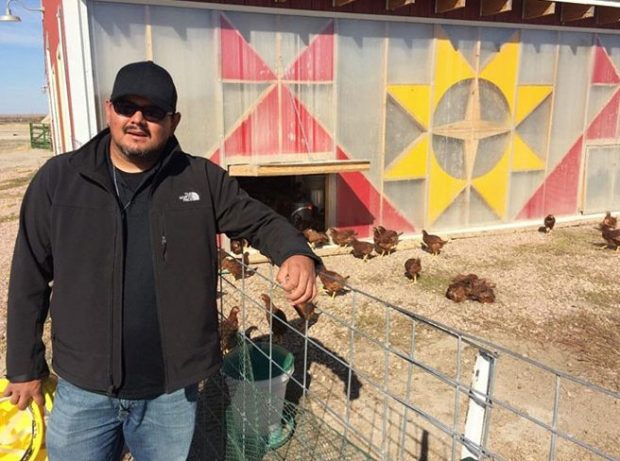
I arrived on the Pine Ridge Reservation on a glorious morning last October eager to meet the folks of Thunder Valley CDC and be on-the-ground with them in their community. Soon after arriving, several members of the Thunder Valley CDC team, including Nick Hernandez, Food Sovereignty Director, and Ernest Weston, Food Sovereignty Coordinator, took us to the Thunder Valley Sun Dance site, a few miles from the main project site. We were welcomed there by a local Lakota spiritual leader, Jerome LeBeaux, a young man with a soft voice and warm presence. The site, which is located near the summit of a ridge, is surrounded by golden rolling hills and, that day, a brilliant blue sky and pleasant cool breeze. The Sun Dance site itself is a rustic circle of wood pillars covered with tree boughs for shade. In the center of the circle, about 100 feet in diameter, a cottonwood prayer tree stood tall. Jerome invited us to touch the tree and offer thoughts and thanks we might have.

Then Jerome told us the story of how Thunder Valley CDC came to be. Ten years previously, Jerome and Nick Tilsen (Executive Director) and several of their peers were returning to their spirituality and building a community of young people ready for change. One evening, as they were getting ready for an Inipi ceremony (the sweat lodge) Jerome and Nick and several other of their peers, then in their early 20’s, found themselves discussing a common complaint of young people everywhere; how the community elders seemed to be holding back progress.

The enlightenment that ensued was essentially a realization that it was their time to act, not by disrespecting their elders but by working with them. One of their first actions was to name their movement. They’d learned from the elders that the valley where the Sun Dance site is located was historically called Thunder Valley, so hence the name. As Jerome explained the origin story of Thunder Valley CDC, a very beautiful and healthy-looking coyote appeared on the ridge not more than 200 feet from us, stared right at us, then trotted away into the gulch. Jerome smiled as he explained what a rare appearance this was, that coyotes normally do not come so close to people, especially in the early morning. But, he was quick to add, coyotes are messengers, and this was a good sign.

Thus Thunder Valley CDC was created and grown from a reconnection to Lakota spirituality among young people on the Pine Ridge Indian Reservation. Its strategy is to collaborate with Lakota youth and families to heal and strengthen people’s cultural identity, using traditional Lakota culture and spirituality to bring social and economic systems change to the Pine Ridge community. It strives to nurture an ecosystem of opportunity which community members can access. Its Food Sovereignty Initiative uses Lakota culture, knowledge, and spirituality as the basis for developing local regenerative food systems throughout the Pine Ridge Reservation.

My experience at the Sun Dance site was inspiring in itself but there was much more to see, namely the Regenerative Demonstration Farm. It includes a poultry production unit, paddock system for poultry foraging, geothermal greenhouse, and organic vegetable gardens. At the Farm, Thunder Valley CDC staff are able to engage community members in learning small-scale regenerative farming to grow nutritional food for their families using seeds that are culturally relevant. The Farm is a model operation ─ 1.3 acres in size ─ revolving around a free-range poultry unit of 500 hens whose primary role is providing manure to improve and maintain soil quality and fertility. The hens also produce eggs as a by-product for sale and consumption, including use by local day care centers and schools. The Farm has traditional nuts and berries, and vegetables too, all for local sale and consumption. It is committed to using Native heirloom seeds and plants that have local cultural significance. Its larger vision is to create a learning environment to increase people’s ability to make healthier food choices.

Thanks to the warmth and graciousness of the Thunder Valley CDC team and the work they do, the optimism that filled me on one gorgeous October day at Pine Ridge has stayed with me. Their vision of what Pine Ridge will be someday soon – a healthier community better able to address and resolve basic social and economic challenges – remains profoundly inspiring.

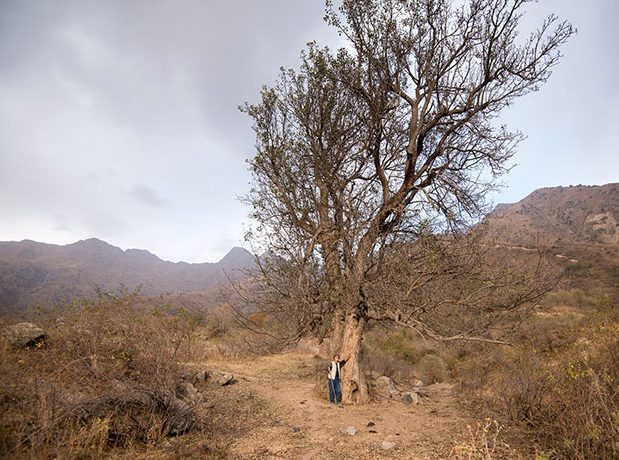
Seeds, Soil & Culture is interested in “centers of origin” for food crops such as potatoes in Peru and neighboring countries, yams in West Africa, and apples in Central Asia. Most sources suggest that present-day Kazakhstan ─ several hundred kilometers north of the Rasht Valley in Tajikistan ─ is the true center of origin of apples, or at least of Malus sieversii, the red apple. There are at least three other origin species of apples: Malus sylvestris, from Europe; Malus orientalis (the yellow apple) from Turkey; and Malus baccata from far eastern Russia.*

Though the Rasht Valley of Tajikistan may not be the absolute center of origin for apples, it has for a very long time been called the Valley of Apples as it is home to numerous heritage fruit varieties cultivated over many centuries. With this historical culture as its context, a Tajik NGO called Public Organization Rushnoi is establishing Kuhsori Ajam, an Apple Park and Botanical Garden located in Jasfr Village, that also houses a cultural museum and meeting center for local fruit growers, village residents, and visitors.

Public Organization Rushnoi’s strategy for learning at Kuhsori Ajam is to use traditional rituals, folk knowledge, cultural heritage and values, and the collection and cultivation of local horticultural seeds and plants as educational tools. All of Rushnoi‘s work is aimed in the long term to fully restore the agrobiocultural diversity of the Rasht Valley. Kuhsori Ajam is home base for this work. This year, Rushnoi is working with 13 local, master fruit farmers to research and collect fruit tree seeds and seedlings. They will plant and graft the heritage varieties they collect using traditional methods and make these varieties healthier and more accessible to farmers to grow, process, and market. The 13 master fruit tree farmers are sharing their traditional knowledge and skills with 2,100 other people in the Valley of Apples including members of 25 rural women’s groups.

Behind the realization of Kuhsori Ajam is the founder of Rushnoi, Mirzosho Akobirov. In 2010, after visiting the Potato Park in Peru, Mirzosho concluded that Tajikistan should create and maintain an Apple Park in his home community of Jafr, Rasht Valley.** Mirzosho had been collecting heritage fruit tree seeds and seedlings for himself over the past 28 years and now wished to share his knowledge more widely for the good of the community. Today Kuhsori Ajam has more than 110 heritage varieties of apples, apricots, and pears thriving on the hillsides of its landscape. Mirzosho cites “love for the native countryside” and “conservation of local biodiversity” and gathering heritage species to “leave them as a legacy of the past to a new generation” as the inspiration for Kuhsori Ajam.***

The cultural environment of the Rasht Valley is conducive to a place like Kuhsori Ajam. Here people take the words, phrases, and sayings of their ancestors as sacred, and they observe traditional wisdom every day. Expressions like “respect the Earth as you do your mother” and “kiss a seed, it fills the granary” are common in Rasht Valley. So is the idea that eating an apple each morning – or simply saying the word “apple” – will bring health to individuals, families, and communities. These are communities who appreciate the dignity of traditional methods, knowledge, cultural heritage, and honest labor, and whose ancestors taught that “only the jeweler knows the dignity of gold”, just as an apple grower knows the dignity of their fruit trees and the land where they grow.


* New Insight into the History of Domesticated Apple: Secondary Contribution of the European Wild Apple to the Genome of Cultivated Varieties. Amandine Cornille, Pierre Galdieux, Marinus J.M. Smulders, Isabel Roldán-Ruiz, Francois Laurens, Bruno Le Cam, Anush Nersesyan, Joanne Clavel, Marina Olonova, Laurence Feugey, Ivan Gabrielyan, Xiu-Guo Zhang, Maude I. Tenaillon, Tatiana Giraud. Published May 10, 2012. https://doi.org/10.1371/journal.pgen.100270
** http://pubs.iied.org/pdfs/14670IIED.pdf
*** https://www.christensenfund.org/2014/08/18/restoring-roots/

Last October, I attended the Oneida Food Sovereignty Summit in Wisconsin, a terrific event where several eventual Seeds, Soil & Culture partners made presentations. One of these was Cynthia Wilson of Utah Diné Bikéyah (UDB). True to its name ─ Diné Bikéyah means “people’s sacred lands” in the Navajo language ─ UDB’s work has long focused on the land areas of Bears Ears National Monument in southern Utah. It is a native-led organization that advocates indigenous conservation of the Earth through healing social, environmental, psychological, and physical issues that conjointly affect people and the Earth. UDB’s approach is to identify cultural values and priorities that are indispensable in regional land management planning. UDB believes that natural landscapes and elders are their communities’ best teachers of kinship, humility, and gratitude. In her talk, Cynthia referred to all these aspects of UDB while explaining its new Traditional Foods Program of which she is director.

UDB’s Traditional Foods Program aims to reconnect people in the region to ecologically and agriculturally intact landscapes to revitalize their food heritage. Native Tribes in the Bears Ears region have many centuries of experience in sustainable gathering, hunting, farming, and nurturing of wild food crops. People of the Bears Ears region have the inherent wisdom to heal challenges they face and the collective will to take action.

This spring I again met Cynthia, and UDB Executive Director Gavin Noyes, in Bluff, Utah, to talk about the Traditional Foods Program. To my surprise, Gavin asked if I would like to hike for an hour or so in Bears Ears. Of course, I said yes. Gavin and Cynthia told me that several hundred runners participating in a four-day “Sacred Strides for Healing Prayer Run” would converge that day in Bluff and continue to a campsite in Bears Ears for the final day. The Prayer Run is a way the Tribes who were involved in establishing, expanding and defending the Bears Ears National Monument might honor their collaborative efforts while paying tribute to the environment and their cultural heritage.

On our hike through pinon pines, yucca plants, and mind-expanding vistas, we were able to see the runners from quite a distance above the deep, wide valley where they ran, a spectacular sight (see photos below). The landscape of the region is truly beyond beautiful and it feels sacred just to be there. Ute, Navajo, and Pueblo peoples have lived here since time immemorial. Hillside cave dwellings and petroglyphs are common in the landscape.

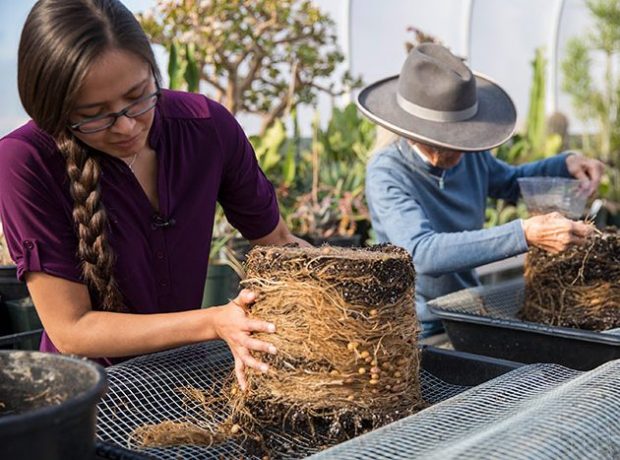
UDB’s first step in its Traditional Foods Program is conducting an assessment of traditional foods in the Bears Ears region while guiding a collaborative process of planning to refine the program’s direction. The goal of the program is to build a model for understanding the traditional food system of Bears Ears and catalyze change in the regional food system that is grounded in indigenous culture and supported by community leaders. The work includes research on the native potato of the Bears Ears region to thoroughly understood this wild food through a biocultural and socioeconomic lens, followed by selection of harvested native potatoes for propagation and distribution across five native Tribes in the region. As Cynthia Wilson has noted, “Reclaiming local traditional food systems helps tribes heal from past wounds and respects our intellectual property by allowing us to lead our own cultural revitalization as sovereign nations.”*

It is a fortunate development and a pleasure that Seeds, Soil & Culture and Utah Diné Bikéyah are now project partners. Seeds, Soil & Culture is looking to support fledgling projects such as the initial work of UDB’s Traditional Foods Program. That we are able to support, from a cultural perspective, ongoing efforts to conserve all that Bears Ears National Monument is meant to represent is very gratifying to our team.


*Commentary: There is much this native potato can teach us. Cynthia Wilson, 2017. https://www.sltrib.com/opinion/commentary/2017/08/19/commentary-there-is-much-this-native-potato-can-teach-us/

We learned of Qachuu Aloom (“Mother Earth” in the Maya Achí language), an indigenous women-led rural organization based in Rabinal, Guatemala, from Groundswell International (www.groundswellinternational.org) and from The Garden’s Edge (www.gardensedge.org). The Garden’s Edge folks told me they were bringing three members of Qachuu Aloom to the National Heirloom Seed & Garden Expo in Santa Rosa (California) in September 2017. So, I decided to attend the event too, where we all learned more about each other.

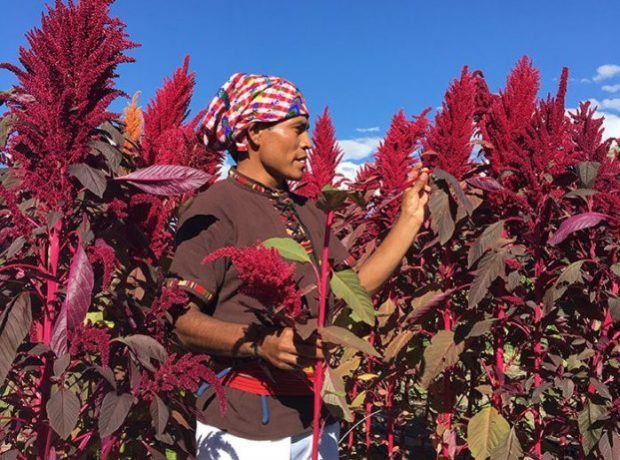
Qachuu Aloom’s mission is caring for Mother Earth in accordance with the Mayan worldview. This has led to community action to rescue ancestral knowledge about sacred seeds ─ corn, beans, amaranth, vegetables, medicinal plants. Its aim is to revitalize the growing, gathering, and consumption of native seeds and nutritious foods to improve the health of families and children. Qachuu Aloom’s philosophy is that seeds are living beings that harbor the history of people who sow them. So, when Achi Maya farmers, many of whom are women, obtain their sacred seeds by gift or trade, they receive them with deep appreciation and gratitude. Achi Maya farmers have learned from their elders how all life is part of an interconnected web of spiritual and physical forces, living beings, and objects. Crops are planted and harvested according to moon cycles. Seeds are stored in clay vessels so they are able to breathe, and they are preserved using medicinal plants.

With its Seeds, Soil & Culture grant, Qachuu Aloom is working with Achi Maya youth and elders to conduct participatory research on several food and farming themes including: 1) The sacred nature of maize and amaranth; 2) The relationship of Water, Sun, Earth, and Wind within the Achi Mayan agricultural cosmovision; 3) Achi Mayan people’s reciprocity with sacred seed; and 4) Medicinal plants. The practical study of corn, amaranth, and the traditional milpa system* includes the physical design of diverse planting system and the spiritual aspects of managing the milpa with respect, gratitude, prayer, and ceremony. It also includes the sharing of stories and information about traditional weaving, yarn making, and plant dyes and how these relate to the Achi Mayan world view.

Finally, Qachuu Aloom has been wise to establish and grow a entrepreneurial partnership with Epic Seeds (www.epicseeds.net) from which it has gained an income stream to help sustain the organization financially. Qachuu Aloom is authentic at its core, led by rural women who have endured their share of pain yet have persevered. We are so pleased to be Seeds, Soil & Culture partners with Qachuu Aloom because of their authenticity. The widespread regional recognition of Qachuu Aloom as a model for other rural organizations, especially those that are largely composed of women, by grounding their farming in traditional knowledge and culture, is powerfully admirable and inspirational.


*The term “milpa” is derived from the Uto-Aztecan Nahuatl word meaning “field” and embraces an agricultural philosophy of working together, reciprocity, and sustainability (from http://www.milpacollective.org/).